Money
A large budget is easy to spend and surprisingly easy to waste
The difference is structural rather than cosmetic, and it is visible on a quote if the quote is itemised.
| Per person per night | What it buys |
|---|---|
| US$800 – 1,200 | Established camps in genuinely good locations, a private vehicle throughout, light-aircraft hops between parks rather than long road transfers, and guiding that is a profession rather than a job. The entry point to a safari that does not compromise. |
| US$1,200 – 1,800 | Camps on private land, where the rules change: off-road driving to a sighting, night drives, walking with an armed guide, and a cap on how many vehicles may attend anything. Usually the point at which people stop comparing safaris on price. |
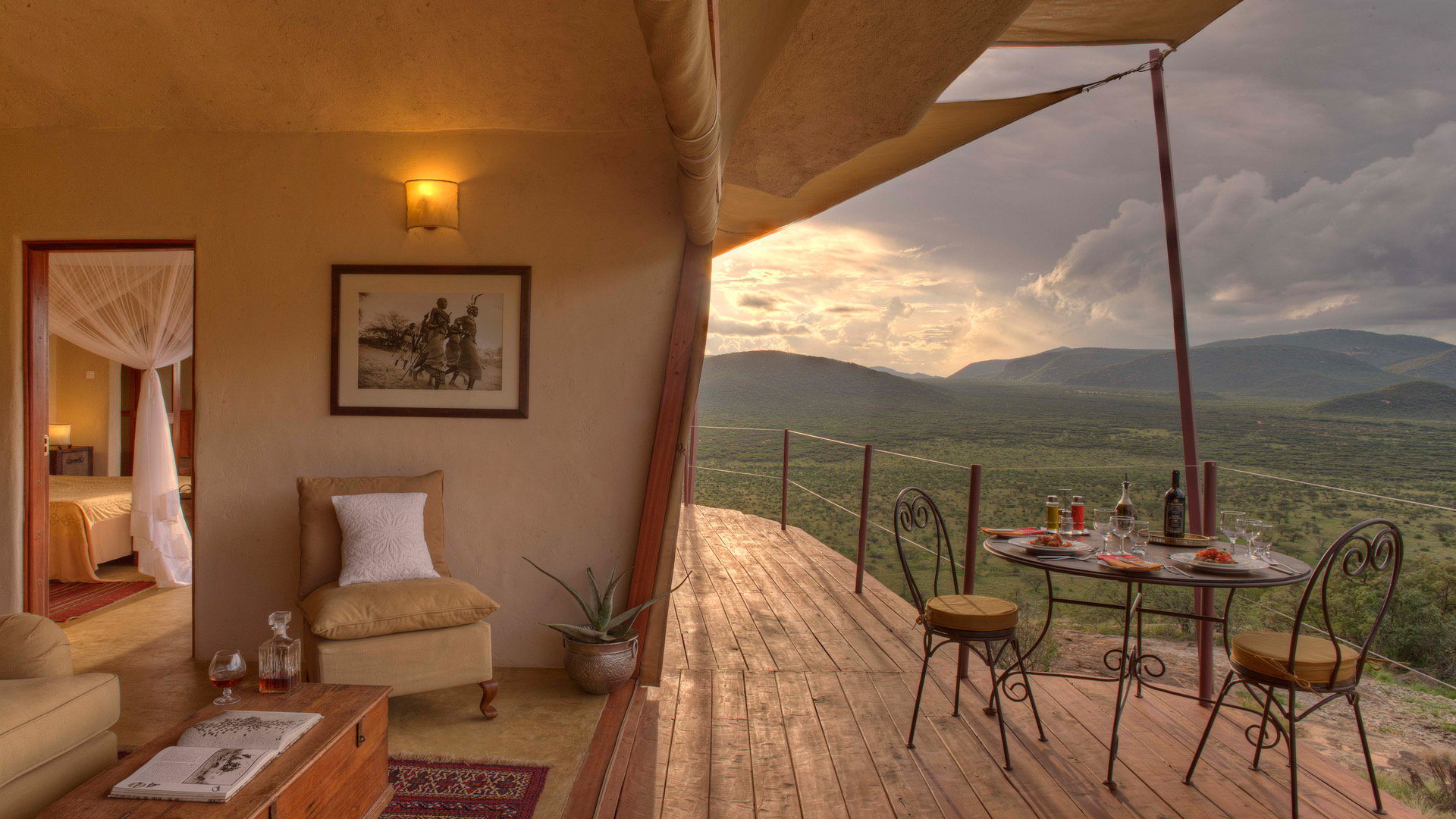
| US$1,800 – 2,500 | The camps people name when they get home. Six to ten tents, an owner or manager who is present, a guide assigned to you for the stay, and food that would hold its own in a city. |
| US$2,500 – 4,000 | A guide who travels with you from park to park rather than being handed over at each one, private charters on your own schedule, and small camps taken whole for your party. |
| US$4,000 and up | Exclusive-use houses and villas with their own staff, mobile expedition camps built for your route, and private aircraft between countries. Bought for privacy and control rather than for thread count. |
Indicative planning ranges only, per person per night sharing, for a fully inclusive safari — accommodation, meals, park and conservancy fees, guiding, and transport between parks. They are what we see in the market, not a quote and not an official tariff. Your quote will be exact and itemised. International flights are not included.
What sits on top
Park, reserve and conservancy fees per person per day; permits where they apply; internal flights and charters; premium drinks at some camps; gratuities. At the top end the charter line can rival the accommodation line, which is precisely why it should not be bundled into it.
The four structural moves
- Remove a place. It takes out a flight, two transfers and a half-eaten day, and the nights go into camps you are already enjoying.
- Make the vehicle private everywhere, not at one camp out of four.
- Buy one guide for the whole trip rather than four handed over at airstrips.
- Put the remaining money at the end — a rest, a coast, a house — where it does more than a larger tent in week one.
Where a large budget gets wasted
On the room. It is the part with photographs, so it is the part that gets upgraded, and it is where you sleep and change. The day happens outside it.
On too many places, because a large budget makes six stops feel affordable and six stops in fourteen nights means no morning is ever the second morning in a camp.
And on charters that replace short scheduled hops, which cost several times a seat and recover about an hour.
What we will tell you
Where your budget stops improving the trip. If the number you have in mind is higher than the itinerary needs, we will say so and show what the same money does spread across fewer places and more nights.
We are paid a commission by the agency that operates the trip, so a larger booking pays us more. Saying that out loud is the only reason to trust the paragraph above it.
Ready to turn this into a real itinerary?
Send us your dates, who is travelling and roughly what you want to spend per person per night. Our Africa specialist comes back within 24 hours with a plan built around them and a costed quote.